

ABOUT US

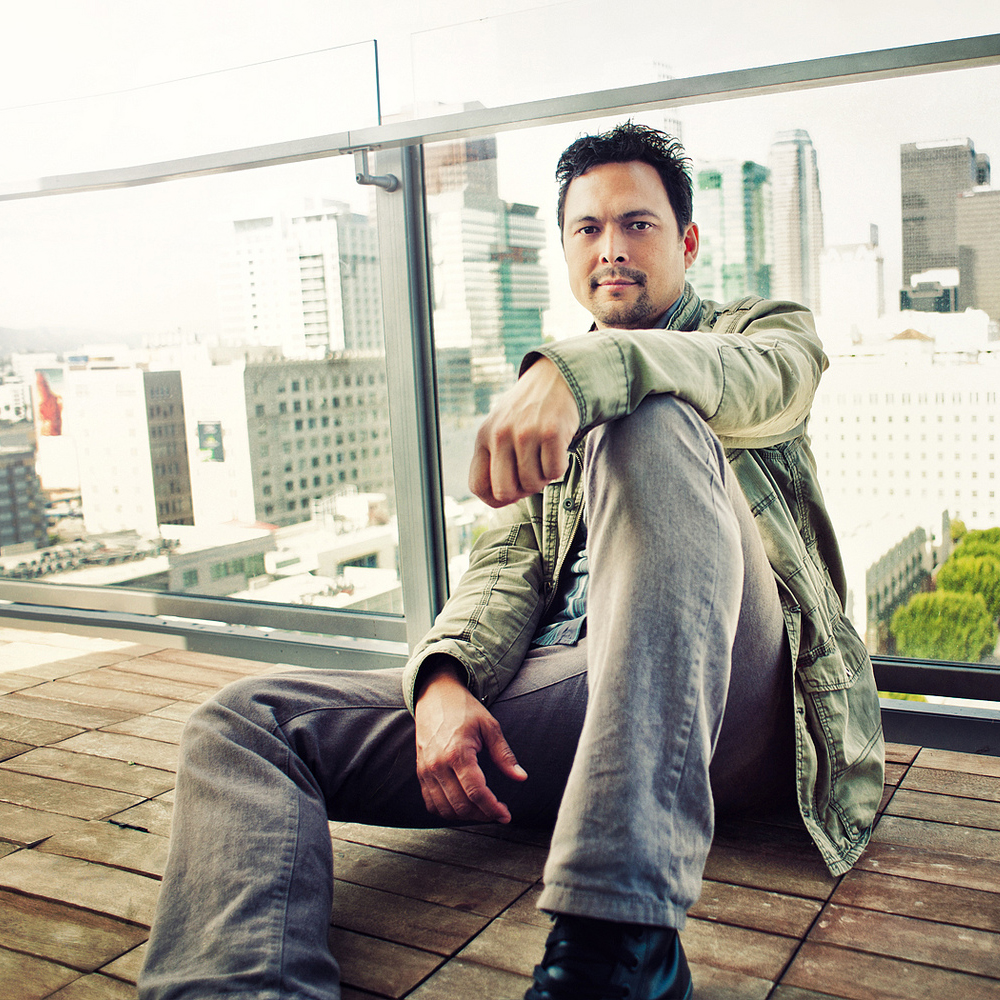
Hi! I am Trishan Nandiay, I am a professional graphics designer and just available on any Market Place to design your Brand Identities. I'm expert in Web Designing, SEO, Open Cart, Graphics Designing, Logo Design, Business Cards, Advertisements, Flyer, Booklet, Book Covers, Company Branding , Photography, Photo Editing. During my degree I successfully combined my studies with work and other commitments showing myself to be self-motivated, organized and capable of working under pressure. In short I am reliable, trustworthy, hardworking and have a genuine interest in contact me. .

MY TEAM

The awesome people behind our brand ... and their life motto.

  • Neila Jovan

    Head Hunter

    I long for the raised voice, the howl of rage or love.

  • Mathew McNalis

    Marketing CEO

    Contented with little, yet wishing for much more.

  • Michael Duo

    Developer

    If anything is worth doing, it's worth overdoing.

MY SKILLS

My pride ourselves with strong, flexible and top notch skills.

Graphics Design

LOGO DESIGN 90%
BUSINESS CARD DESIGN 80%
T-SHIRT 70%

Websites

Development 90%
Design 80%
Marketing 70%

PHOTOGRAPHY

PHOTO EDITING 90%
PHOTOSHOP 80%
ILLISTRATOR 70%

ACHIEVEMENTS

We help our clients integrate, analyze, and use their data to improve their business.

150

GREAT PROJECTS

300

HAPPY CLIENTS

650

COFFEES DRUNK

1568

FACEBOOK LIKES

STRATEGY & CREATIVITY

Phasellus iaculis dolor nec urna nullam. Vivamus mattis blandit porttitor nullam.

PORTFOLIO

We pride ourselves on bringing a fresh perspective and effective marketing to each project.

  • Adove Photoshop

    Adobe Photoshop is a raster graphics editor developed and published by Adobe Systems for macOS and Windows.
    Photoshop was created in 1988 by Thomas and John Knoll. Since then, it has become the de facto industry standard in raster graphics editing, such that the word "photoshop" has become a verb as in "to Photoshop an image," "photoshopping" and "photoshop contest", though Adobe discourages such use.[7] It can edit and compose raster images in multiple layers and supports masks, alpha compositing and several color models including RGB, CMYK, CIELAB, spot color and duotone. Photoshop has vast support for graphic file formats but also uses its own PSD and PSB file formats which support all the aforementioned features. In addition to raster graphics, it has limited abilities to edit or render text, vector graphics (especially through clipping path), 3D graphics and video. Photoshop's featureset can be expanded by Photoshop plug-ins, programs developed and distributed independently of Photoshop that can run inside it and offer new or enhanced features.

    Photoshop's naming scheme was initially based on version numbers. However, in October 2002, following the introduction of Creative Suite branding, each new version of Photoshop was designated with "CS" plus a number; e.g., the eighth major version of Photoshop was Photoshop CS and the ninth major version was Photoshop CS2. Photoshop CS3 through CS6 were also distributed in two different editions: Standard and Extended. In June 2013, with the introduction of Creative Cloud branding, Photoshop's licensing scheme was changed to that of software as a service rental model and the "CS" suffixes were replaced with "CC". Historically, Photoshop was bundled with additional software such as Adobe ImageReady, Adobe Fireworks, Adobe Bridge, Adobe Device Central and Adobe Camera RAW.
    Alongside Photoshop, Adobe also develops and publishes Photoshop Elements, Photoshop Lightroom, Photoshop Express and Photoshop Touch. Collectively, they are branded as "The Adobe Photoshop Family". It is currently a licensed software.

  • WEB DEVELOPMENT


    Web development is a broad term for the work involved in developing a web site for the Internet (World Wide Web) or an intranet (a private network). Web development can range from developing the simplest static single page of plain text to the most complex web-based internet applications, electronic businesses, and social network services. A more comprehensive list of tasks to which web development commonly refers, may include web engineering, web design, web content development, client liaison, client-side/server-side scripting, web server and network security configuration, and e-commerce development. Among web professionals, "web development" usually refers to the main non-design aspects of building web sites: writing markup and coding. Most recently Web development has come to mean the creation of content management systems or CMS. These CMS can be made from scratch, proprietary or open source. In broad terms the CMS acts as middleware between the database and the user through the browser. A principle benefit of a CMS is that it allows non-technical people to make changes to their web site without having technical knowledge.

    For larger organizations and businesses, web development teams can consist of hundreds of people (web developers) and follow standard methods like Agile methodologies while developing websites. Smaller organizations may only require a single permanent or contracting developer, or secondary assignment to related job positions such as a graphic designer and/or information systems technician. Web development may be a collaborative effort between departments rather than the domain of a designated department. There are 3 kind of web developer specialization; Front-End Developer, Back-End Developer, and Full Stack Developer.
  • SEO

    Search engine optimization (SEO) is the process of affecting the visibility of a website or a web page in a web search engine's unpaid results—often referred to as "natural", "organic", or "earned" results. In general, the earlier (or higher ranked on the search results page), and more frequently a site appears in the search results list, the more visitors it will receive from the search engine's users, and these visitors can be converted into customers.[1] SEO may target different kinds of search, including image search, local search, video search, academic search,[2] news search and industry-specific vertical search engines.
    As an Internet marketing strategy, SEO considers how search engines work, what people search for, the actual search terms or keywords typed into search engines and which search engines are preferred by their targeted audience. Optimizing a website may involve editing its content, HTML and associated coding to both increase its relevance to specific keywords and to remove barriers to the indexing activities of search engines. Promoting a site to increase the number of backlinks, or inbound links, is another SEO tactic. By May 2015, mobile search had surpassed desktop search.[3] Google is developing and pushing mobile search as the future in all of its products and many brands are beginning to take a different approach to their internet strategies
  • Web Design

    Web design encompasses many different skills and disciplines in the production and maintenance of websites. The different areas of web design includeweb graphic design; interface design; authoring, including standardized code and proprietary software; user experience design; and search engine optimization.


  • Photography

    Photography is the science, art, application and practice of creating durable images by recording light or other electromagnetic radiation, either electronically by means of an image sensor, or chemically by means of a light-sensitive material such as photographic film.[1]
    Typically, a lens is used to focus the light reflected or emitted from objects into a real image on the light-sensitive surface inside a camera during a timed exposure. With an electronic image sensor, this produces an electrical charge at each pixel, which is electronically processed and stored in a digital image file for subsequent display or processing. The result with photographic emulsion is an invisible latent image, which is later chemically "developed" into a visible image, 
    either negative or positive depending on the purpose of the photographic material and the method of processing. A negative image on film is traditionally used to photographically create a positive image on a paper base, known as a print, either by using an enlarger or by contact printing.
    Photography is employed in many fields of science, manufacturing (e.g., photolithography), and business, as well as its more direct uses for art, film and video production, recreational purposes, hobby, and mass communication.


  • Graphics Design.

    The term graphic design was coined by William Addison Dwiggins in 1922.[2] However, graphic design-like activities span human existence: from the caves of Lascaux, to Rome's Trajan's Column to the illuminated manuscripts of the Middle Ages, to the neon lights of Ginza, Tokyo. In "Babylon, artisans pressed cuneiform inscriptions into clay bricks or tablets which were used for construction. The bricks gave information such as the name of the reigning monarch, the builder, or some other dignitary".[3] This was the first known road sign announcing the name of the governor of a state or mayor of the city. The Egyptians developed communication by hieroglyphics that used picture symbols dating as far back as 136 B.C. found on the Rosetta Stone. "The Rosetta stone, found by one of Napoleon's engineers was an advertisement for the Egyptian ruler, Ptolemy as the "true Son of the Sun, the Father of the Moon, and the Keeper of the Happiness of Men"" [3] The Egyptians also invented papyrus, paper made from reeds found along the Nile, on which they transcribed advertisements more common among their people at the time. During the "Dark Ages", from 500 AD to 1450 AD, monks created elaborate, illustrated manuscripts.
    In both its lengthy history and in the relatively recent explosion of visual communication in the 20th and 21st centuries, the distinction between advertising, art, graphic design and fine art has disappeared. They share many elements, theories, principles, practices, languages and sometimes the same benefactor or client. In advertising, the ultimate objective is the sale of goods and services. In graphic design, "the essence is to give order to information, form to ideas, expression, and feeling to artifacts that document human experience."[4]


    Graphic design in the United States began with Benjamin Franklin who used his newspaper The Pennsylvania Gazette, to master the art of publicity to promote his own books and to influence the masses. "Benjamin Franklin's ingenuity gained in strength as did his cunning and in 1737 he had replaced his counterpart in Pennsylvania, Andrew Bradford as postmaster and printer after a competition he instituted and won. He showed his prowess by running an ad in his General Magazine and the Historical Chronicle of British Plantations in America (the precursor to the Saturday Evening Post) that stressed the benefits offered by a stove he invented, named called the Pennsylvania Fireplace. His invention is still sold today and is known as the Franklin stove. "[5]
    American advertising initially imitated British newspapers and magazines. Advertisements were printed in scrambled type and uneven lines that made it difficult to read. Franklin better organized this by adding 14-point type for the first line of the advertisement; although later shortened and centered it, making "headlines". Franklin added illustrations, something that London printers had not attempted. Franklin was the first to utilize logos, which were early symbols that announced such services as opticians by displaying golden spectacles. Franklin taught advertisers that the use of detail was important in marketing their products. Some advertisements ran for 10-20 lines, including color, names, varieties, and sizes of the goods that were offered.

    Powered by Blogger.

    WHAT I DO

    I've been developing corporate tailored services for clients for 30 years.

    CONTACT ME

    For enquiries you can contact us in several different ways. Contact details are below.

    trishan Nandiay

    • Street :Chittagong,North Kattali,Eshan Mohajan road,Senbari
    • Person :Trishan
    • Phone :+01682154969
    • Country :Bangladesh
    • Email :trishannandiay@gmail.com

    Lorem ipsum dolor sit amet, consectetur adipisicing elit, sed do eiusmod tempor incididunt ut labore et dolore magna aliqua.

    Lorem ipsum dolor sit amet, consectetur adipisicing elit, sed do eiusmod tempor incididunt ut labore et dolore magna aliqua. Ut enim ad minim veniam, quis nostrud exercitation.